Guide
How to clean a wool rug
Updated September 8, 2026
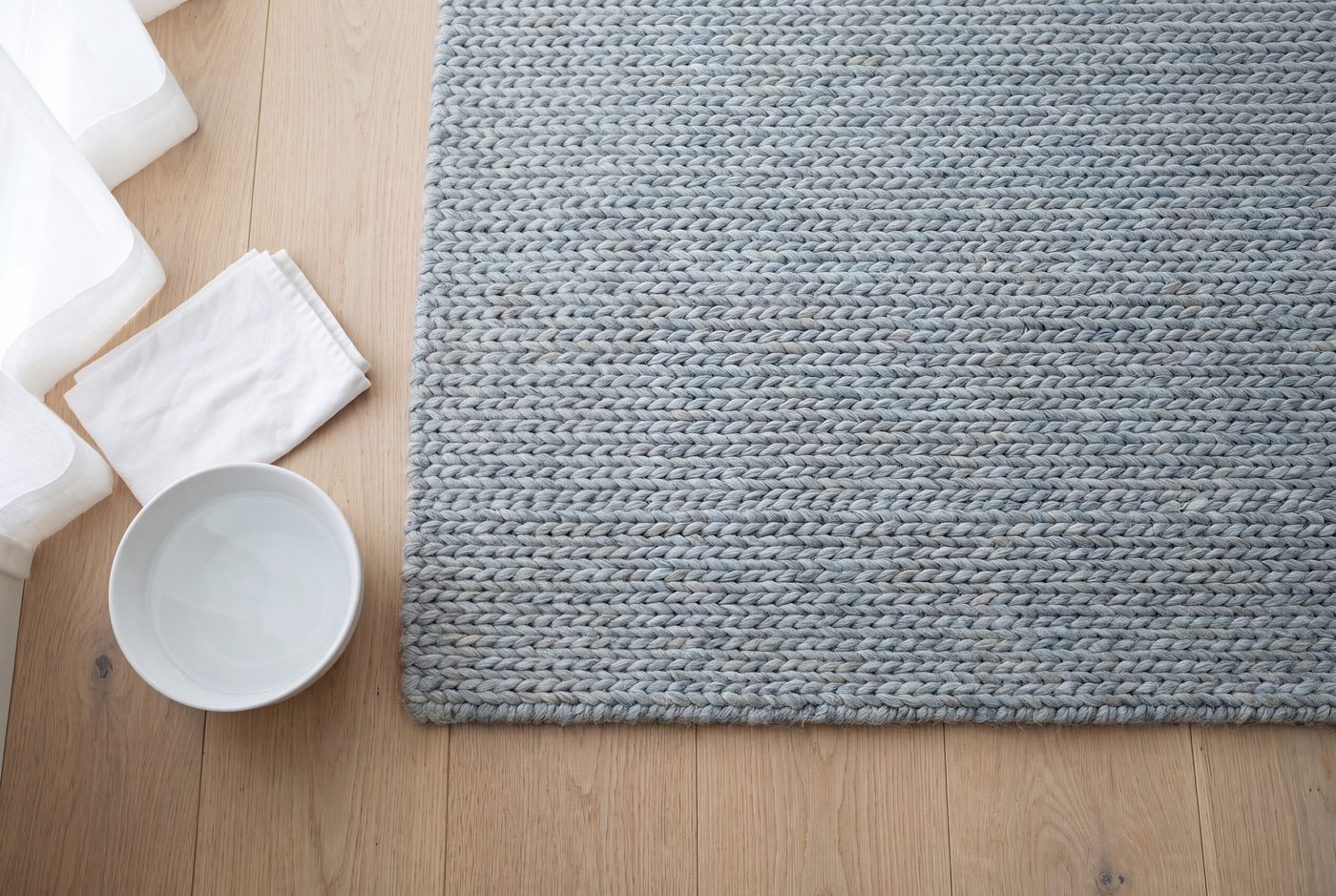
Wool fiber carries lanolin, a natural wax that makes the surface shed liquid for the first few minutes before it soaks in. That grace period is the whole reason wool forgives a spill, and it is why speed matters more than technique.
A fresh spill
- Blot, pressing straight down. Use a white cloth or paper towel. Rubbing drives the liquid into the pile and spreads the edge of the stain outward.
- Work from the outside in. Start at the edge of the spill and move toward the middle, so the mark shrinks rather than widens.
- Then cold water, a little at a time. Damp cloth, blot, repeat. Wool takes a long time to dry, and a soaked patch is a slower problem than the stain.
- Weigh down a dry towel on the spot and leave it an hour to pull the remaining moisture up out of the pile.
For anything greasy, a drop of clear dish soap in cold water on the cloth. Rinse by blotting with plain water afterward so no soap stays in the fiber, because dried detergent attracts dirt and the spot turns gray in a month.
Four things that damage wool
- Hot water. Heat plus agitation felts wool, which means the fibers lock together permanently. The rug shrinks and stiffens and does not come back.
- Bleach and any oxygen or chlorine cleaner. Wool is a protein fiber. Bleach dissolves it and strips the color at the same time.
- Alkaline detergents, including most laundry powder. Wool wants a pH close to neutral. Clear dish soap in cold water is the safe household option.
- A beater bar. A rotating brush pulls loops out of the weave and fuzzes the surface.
Vacuuming, which is most of the work
Wool sheds loose fiber for the first several months. That is the rug settling, and vacuuming it up is the job.
- Use suction only, brush roll switched off, or a hard floor setting.
- Vacuum weekly in traffic, monthly elsewhere.
- Every few months, turn the rug over and vacuum the back, then the floor underneath. Grit works down through the pile and cuts the fibers from below, which is what actually wears a wool rug out.
- Rotate it 180 degrees twice a year so one end does not take all the sun and all the footfall.
Deep cleaning
Wool takes a long time to dry, and a rug that stays damp for more than a day smells and can mildew from the backing up.
A small rug can be washed outdoors on a hard surface: cold water, a wool-safe or neutral soap, a soft brush in the direction of the pile, rinse until the water runs clear, squeegee the water out, then dry flat with air moving over both sides.
A room-size rug is a job to send out. Professional cleaners immerse and centrifuge it, which removes water in minutes rather than days. Every two to five years is normal, sooner with pets.
Do not use a rented hot water extractor on wool. It puts a large amount of hot water in and takes only some of it back out.
Pet accidents
Urine is the one spill where speed is not enough on its own, because wool is a protein fiber and urine bonds to it as it dries.
- Blot out as much as you physically can, standing on a folded towel over the spot to press it up out of the pile.
- Rinse with cold water and blot again, several times. Most of the odor leaves with the liquid.
- Use an enzyme cleaner made for wool, following its own timing. Enzymes break down the compounds that hold the smell rather than covering them.
- Dry it fast, with a fan on the spot.
Skip anything containing bleach, ammonia or an oxygen booster. Ammonia in particular smells like urine to a returning pet.
A large accident that has soaked through to the backing is a job for a professional cleaner, because the smell is in the foundation and not the pile.
Baking soda, steam and dish soap
Three things people ask about, in short.
- Baking soda is safe on wool and useful for odor. Sprinkle it on dry, leave it several hours, vacuum it out. It absorbs smell and does nothing for a stain.
- A steam cleaner is not safe on wool. Heat plus moisture plus agitation is the exact recipe for felting, which is permanent. Steam is the single most common way a wool rug is ruined at home.
- Clear dish soap is safe in cold water, in a very small amount, rinsed out by blotting with plain water afterward. Use the plain kind with no bleach, no oxygen booster and no added moisturizer.
Also avoid a rented carpet cleaning machine. Those put hot water in under pressure and recover only part of it, which leaves wool wet for days.
Moths
Moths eat wool, and they lay in the parts of a rug nobody disturbs: under furniture, under a sofa, along the edge against a wall.
The prevention is movement and light. Vacuum under the furniture, not only around it, and lift and turn the rug a few times a year. Damage shows as bare patches with short cropped fibers and fine sandy grit, which is casing rather than dirt.
A rug going into storage should be cleaned first, because it is the soil in a dirty rug that attracts them, then rolled with the pile facing in and stored somewhere dry with air movement.
Shedding, pills and sprouts
- Shedding is normal and slows over about six months. Keep vacuuming.
- Pills on the surface can be lifted off with scissors.
- A sprout, one loop standing proud of the pile, gets trimmed level with scissors. Pulling it unravels the row.