Guide
Do you need a rug pad
Updated September 8, 2026
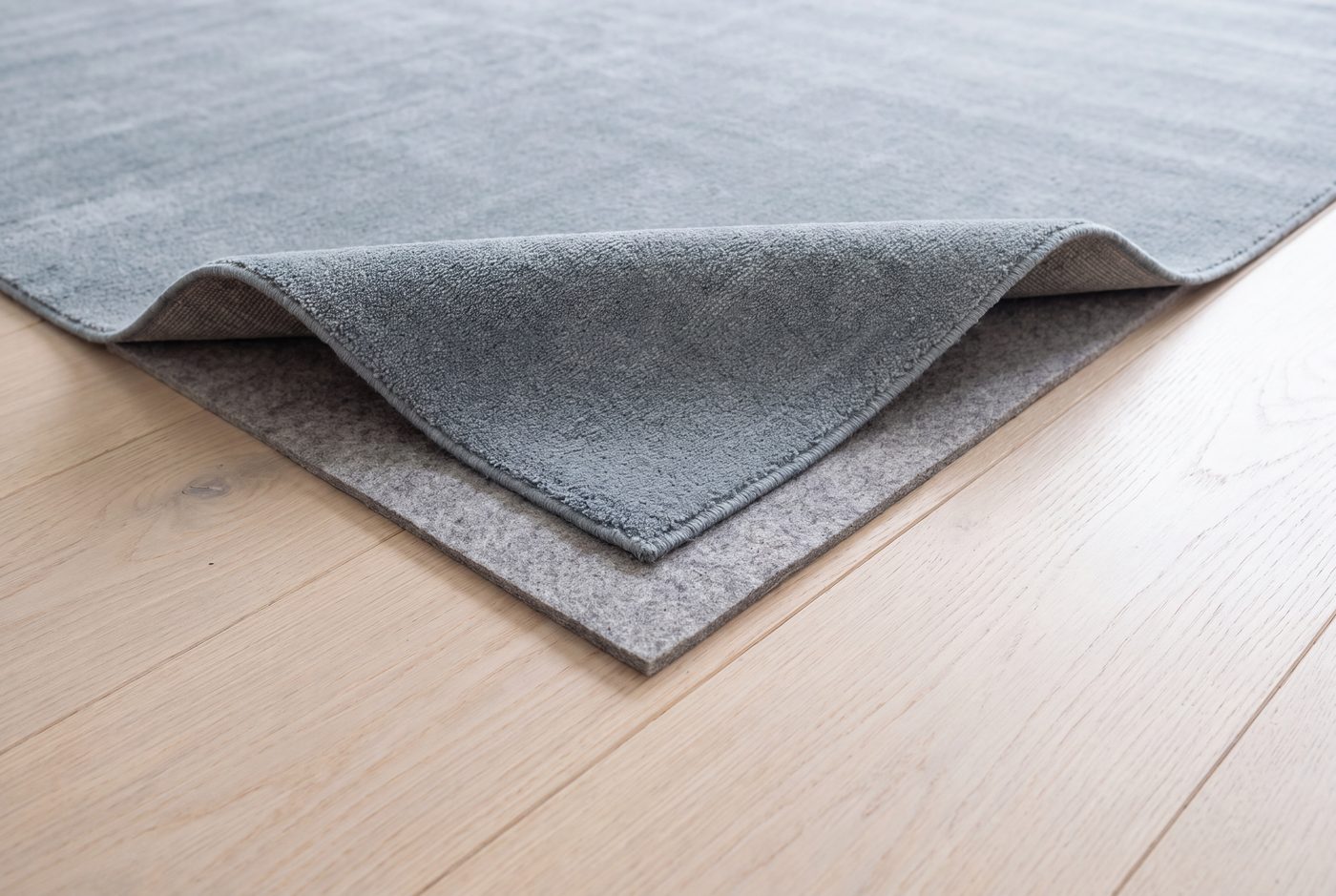
We sell rugs and not pads, so what follows is what a pad does and when it is worth buying one elsewhere. Some of our rugs are backed to grip on their own and need nothing underneath.
What a pad actually does
Four jobs, and sliding is only the first.
- Grip. Stops the rug moving under foot, which on a hard floor is a genuine trip risk at the edges.
- Airflow and protection. Holds the rug's back off the floor so grit cannot grind between the two. This is the job that decides how long the rug lasts, and it is the one nobody buys a pad for.
- Cushion. Softer underfoot, and it takes some of the impact that flattens a pile.
- Quiet. Absorbs footfall, which matters in an apartment.
When you can skip one
- The rug is backed to grip already. Check the listing.
- Furniture is standing on it. A sofa with its front legs on the rug holds it still. This is the common case in a living room and the reason a large rug under a seating group often needs nothing.
- It is a small rug in a low traffic corner.
When you want one
- A hard floor with a rug that walks under foot.
- A high traffic route, a hallway or a runner beside a bed, where the rug is pushed in one direction every day.
- A thin flatweave on wood, where you can feel the floor through it.
- A jute or other coarse natural fiber rug, where the back is abrasive against the floor.
On carpet
A pad on carpet does a different job. It stops the rug creeping and rippling, which happens because the carpet pile underneath moves.
Use a pad made for carpet, which is usually a stiffer needle-punched type. A soft foam or felt pad on carpet makes the problem worse, because it adds another layer that can move.
Thickness and size
- A quarter inch is the usual choice. Enough cushion to feel, thin enough that a door still clears the rug.
- An eighth inch under a thin flatweave or where a door swings close to the floor.
- Half an inch only in a bedroom or a low traffic room, and check your doors first.
Cut the pad about an inch smaller than the rug on every side. The rug edge should reach the floor so it lies flat and nothing catches a toe. A pad cut to the exact size shows at the edges and lifts the border.
Under a bed, a dining table and other furniture
- Under a bed: mostly unnecessary. The bed holds the rug still, and the part of the rug you walk on is the part sticking out past it. A pad is worth it for cushion beside the bed rather than for grip.
- Under a dining table: worth it. The chairs drag in two directions every day, and the pad both holds the rug and takes the wear. Use a thin one so the chair legs still slide.
- Under a sofa or a heavy seating group: the furniture is doing the gripping already. A pad here is for cushion and for keeping grit off the floor.
If a pad is the wrong size
A pad smaller than the rug is fine and is what you want, cut to about an inch less on every side.
A pad noticeably smaller than that, an 8 x 10 pad under a 9 x 12 rug for instance, leaves a foot of unsupported rug all the way round. The edges then lift, curl and catch, which is worse than no pad at all because the trip hazard moves to the perimeter.
A pad larger than the rug is always wrong. It shows at the edges and holds the border up off the floor.
Instead of a pad
Options people use, and what each is actually good for.
- Silicone or rubber grip strips at the corners. Cheap, they stop a small rug creeping, and they do nothing for cushion, airflow or wear.
- Double sided rug tape. It works and it is the one to be careful with, because the adhesive can lift a floor finish and can be very hard to remove from a rug backing.
- A caulk bead along the back edges. Effective and permanent, and it makes the rug harder to clean properly.
- Furniture. The free option, and the one that works: a rug held by a sofa is a rug that does not move.
Nothing above replaces what a pad does for airflow and wear, which is the job that decides how long the rug lasts.
What can mark a floor
Cheap pads with a solid plastic or adhesive backing can react with a hardwood finish and leave a print that does not come off. Felt, natural rubber, and felt bonded to natural rubber are the safe choices on a finished wood floor.
Nothing on a rug pad should be described as adhesive. A pad that sticks to the floor is one that damages it.