Guide
How to clean an outdoor rug
Updated September 8, 2026
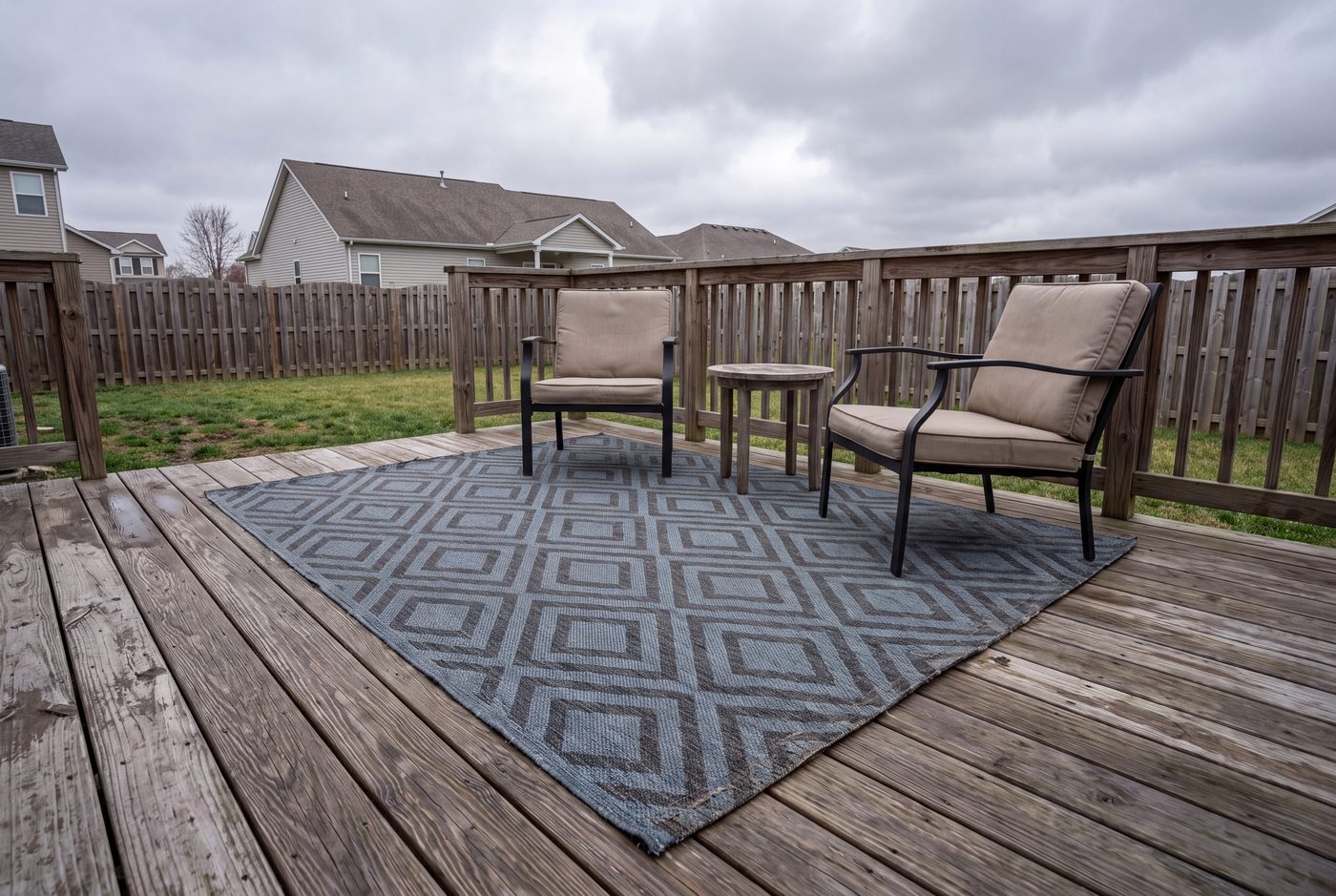
Most outdoor rugs are polypropylene, a synthetic fiber that does not absorb water. The dirt sits on the surface instead of soaking into the fiber, which is why an outdoor rug can be cleaned with a hose in a way a wool rug never could.
Check the listing for your rug before you start. The instructions below are for synthetic outdoor rugs and are not safe for natural fiber rugs used on a covered porch.
The routine
- Shake it out or sweep it with a stiff broom. Most of what is on an outdoor rug is loose grit, leaves and pollen, and it comes off dry.
- Lift the rug and sweep the deck underneath. Trapped debris holds moisture against the boards, which is what marks a deck and what grows mildew on the rug back.
- Hose it down, working in one direction so the water carries the dirt off an edge rather than around the middle.
- For anything the hose leaves behind, a bucket of warm water with a squirt of dish soap and a soft bristle brush. Scrub with the weave.
- Rinse until the water runs clear. Soap left in a synthetic rug is sticky and collects dirt faster than the rug collected it in the first place.
Drying is the part people skip
Dry it flat, off the ground, with air on both sides. Over a railing, two chairs, or a fence.
A rug left to dry lying on a deck traps water underneath, and that is how both the rug and the boards end up with mildew. Polypropylene itself does not rot, so mildew grows on what is sitting on it: pollen, dust and organic debris. Removing the moisture removes the food source.
Mildew and mold
Black or green speckling on an outdoor rug is nearly always surface growth rather than damage to the fiber.
- Take the rug off the deck, into the sun if possible.
- Scrub with a stiff brush to break up the growth, then wash as above.
- For anything remaining, a solution of one part white vinegar to three parts water, left on for fifteen minutes, then scrubbed and rinsed thoroughly.
- Dry it fully before it goes back down.
Avoid bleach unless the listing states the rug is bleach safe. It removes color from many outdoor rugs and does nothing the vinegar and the sun do not.
When it is turning green
Green is algae rather than mold, and it means the rug is staying damp: shade, a spot that never gets sun, or water sitting under it because it is lying flat on a deck.
Wash it as above, then fix the cause. Lift the rug after heavy rain, or move it somewhere that dries out, or stand it up for a day each week. A rug that is cleaned and put straight back into the same damp corner is green again in a month.
Without a pressure washer
A hose and a stiff brush do everything a pressure washer does here, with no way to damage the weave. Wet the rug, work a bucket of warm water and dish soap over it with the brush, rinse in one direction off an edge, and dry it flat off the ground.
Two things worth knowing about what to add to the bucket.
- White vinegar at one part to three parts water is the useful one for mildew and odor.
- Baking soda sprinkled on dry and left a few hours absorbs smell before you wash.
- Oxygen bleach products are effective and will lighten some outdoor rugs. Test on a corner the furniture covers, and only if the listing does not say otherwise.
In a washing machine
Most outdoor rugs are too large and too heavy wet, and the grit they carry ends up in the pump. A small flatweave outdoor rug that the listing says is machine washable can go in on cold and gentle. Everything else is a hose job.
On a concrete patio
Concrete holds moisture and passes it up into whatever is lying on it, so an outdoor rug on concrete needs lifting more often than one on a deck, not less. Sweep the concrete underneath at the same time, since the grit trapped there is what abrades the rug's backing.
Storing one over winter
Wash it, dry it completely, then roll it rather than folding it. Folds set permanent creases in synthetic fiber. Store it somewhere dry, and standing on end if the space allows, since a rolled rug flat on a garage floor will pick up moisture from the concrete.
A pressure washer
A pressure washer on a low setting and a wide fan, held well back, is fine on most polypropylene. Held close it separates the weave and fuzzes the surface permanently. A hose and a brush do the same job with no way to damage the rug.